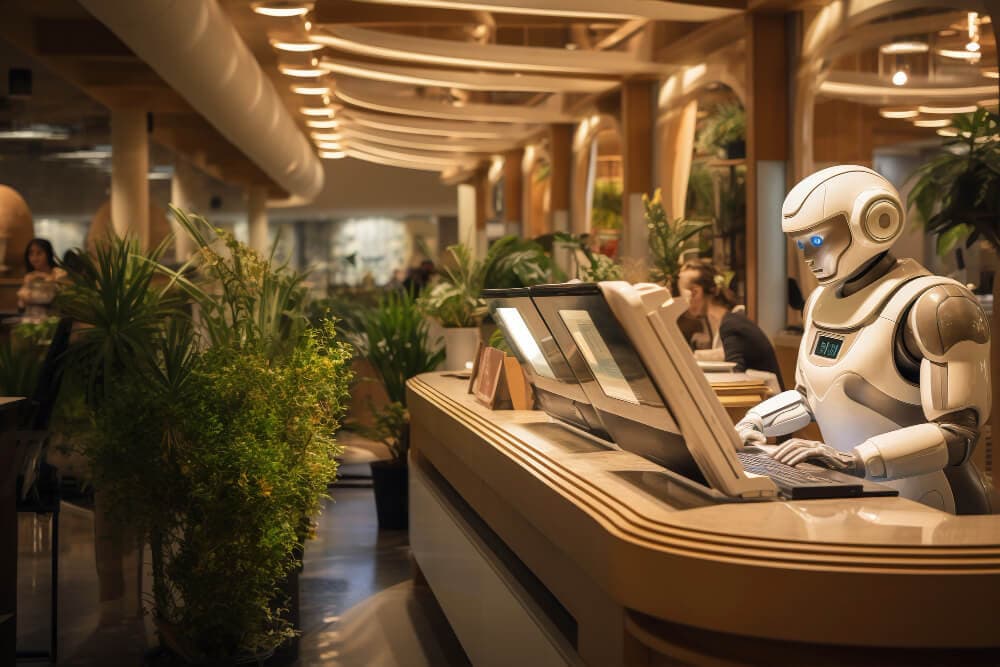
How Agentic AI Is Transforming Hospitality and Enhancing Guest Experiences
U
On Mon, Feb 09, 2026
Agentic AI in Hospitality
The hospitality industry faces growing demands for personalized, seamless, and efficient guest services. Traditional approaches often struggle to keep pace with rapidly evolving guest expectations. Agentic AI in Hospitality is emerging as a transformative solution, enabling intelligent systems that operate autonomously and proactively. By taking initiative and making independent decisions, agentic AI is reshaping how hotels, resorts, and hospitality providers engage with guests across every touchpoint.
What Agentic AI Means for Hospitality
Agentic AI goes beyond conventional AI tools that respond only to predefined commands. It can anticipate needs, resolve issues proactively, and adapt to changing situations with minimal human input. This level of intelligence allows hospitality businesses to deliver more intuitive, responsive, and consistent services.
Solutions developed by a specialized AI development company in USA help hospitality organizations implement agentic AI frameworks that align with real-world operational needs while maintaining scalability and compliance.
Enhancing Personalization Through Agentic AI
Personalization plays a critical role in guest satisfaction and brand loyalty. Agentic AI enhances personalization by analyzing data from multiple touchpoints, including booking history, in-stay behavior, and preference patterns. Using these insights, it tailors services to meet individual guest expectations in real time.
Key applications include:
Customized room environments: Preparing lighting, temperature, and entertainment preferences before arrival
Personalized suggestions: Recommending dining options, activities, or attractions aligned with guest interests
Adaptive service delivery: Adjusting housekeeping schedules or amenities based on guest habits
Hotels leveraging agentic AI-driven personalization consistently report improved guest satisfaction and stronger repeat engagement.
Improving Operational Efficiency
Agentic AI significantly improves operational efficiency by automating routine workflows and managing resources intelligently. This reduces staff workload and enables teams to focus on higher-value, guest-facing interactions.
Common use cases include:
Automated check-in and check-out: Reducing wait times and front-desk congestion
Predictive maintenance: Identifying potential equipment issues before service disruptions occur
Smart inventory control: Monitoring supply usage and ensuring timely replenishment
These systems are typically implemented in collaboration with an experienced IT software development company, ensuring seamless integration with existing hotel management platforms.
Elevating Guest Communication
Effective communication is essential in hospitality. Agentic AI strengthens guest engagement by enabling round-the-clock support through intelligent virtual assistants that understand context, intent, and prior interactions.
Unlike basic chatbots, agentic AI can independently handle complex requests, escalate issues only when human involvement is required, and deliver consistent responses across channels. Guests can request amenities, modify reservations, or inquire about services instantly, improving responsiveness and trust.
Real-World Applications of Agentic AI
Hospitality providers across segments are already using agentic AI to enhance service delivery:
Luxury hotels creating personalized itineraries using guest preferences, weather data, and local events
Resorts automating service logistics to improve operational efficiency
Boutique hotels proactively managing guest feedback and online reputation using AI-driven insights
These examples demonstrate how agentic AI adapts to different hospitality models and business goals.
Challenges and Key Considerations
While agentic AI offers clear advantages, thoughtful implementation is essential. Hospitality providers must address data privacy requirements, ensure smooth system integration, and preserve the human element that defines great guest experiences. AI should enhance staff capabilities rather than replace personal interactions.
The Future of Hospitality with Agentic AI
As agentic AI continues to evolve, it will enable emotionally adaptive services, deeper multilingual engagement, and tighter integration with connected travel ecosystems. Hospitality brands that adopt agentic AI today will be better positioned to meet the expectations of future travelers while delivering smarter, more personalized experiences.